

Virtuosity: The Art of Excellence
Viktor

Virtuosity must be defined with veracity before moving forward. The literally or should I say official, yet malleable definition of most words can be found here at Merriam-Webster Dictionary online-
Virtuosity as defined by Merriam-Webster Dictionary, is a descriptor often applied to musicians, writers, actors, dancers, and athletes. A virtuoso is an exceptionally skilled performer, and a VIRTUOSITY™ display is one that impresses the audience with remarkable achievements.

This symbol and logo will be the brand image for moment. Blogging is all new to me and I will be looking to become a, yeah you guessed it, a VIRTUOSO at the art of blogging.
Virtus in Classical Latin conveys valor, masculinity, excellence, courage, character, and worth as only a few attributes which are certainly masculine fundamental strengths. It was frequently extolled as a virtue of Roman emperors and was personified as more than just a word, but an archetype of existence, seen in their deity—VIRTUS.
In Roman mythology, Virtus (Latin pronunciation: [ˈwɪrt̪uːs̠]) was the deity of bravery and military strength, the personification of the Roman virtue of virtus. The Greek equivalent deity was Arete. The deity was identified with the Roman god Honos (personification of honour) and was often honoured together with him, such as in the Temple of Virtus and Honos at the Porta Capena in Rome.
The deity the Romans worshipped was depicted in many forms. For instance, on Tetricus coins, the deity could be seen as a motherly figure, an elderly man, or a young man, equipped with a spear, a combat helmet, or donning a cape. These specific coins were during the rule of Gaius Pius Esuvius Tetricus during the Gallic Roman Empire.
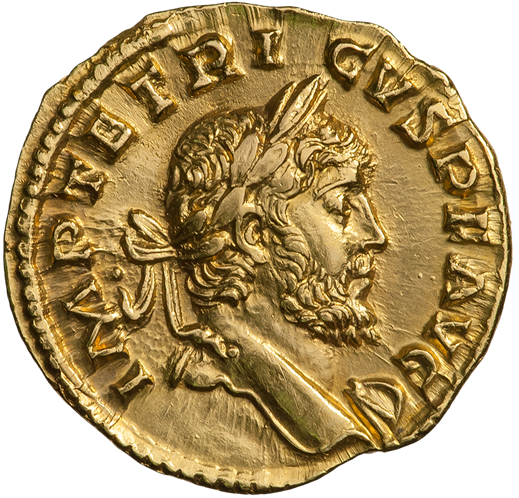
Tetricus I coins like this one were issued from 271 until 274 ADSpeaking of this Tetricus I, and the Gallic Roman Empire in modern Cologne, Germany has quite the history. A brief description-
The Gallic Empire or the Gallic Roman Empire are names used in modern historiography for a breakaway part of the Roman Empire that functioned de facto as a separate state from 260 to 274. It originated during the Crisis of the Third Century, when a series of Roman military leaders and aristocrats declared themselves emperors and took control of Gaul and adjacent provinces without attempting to conquer Italy or otherwise seize the central Roman administrative apparatus.
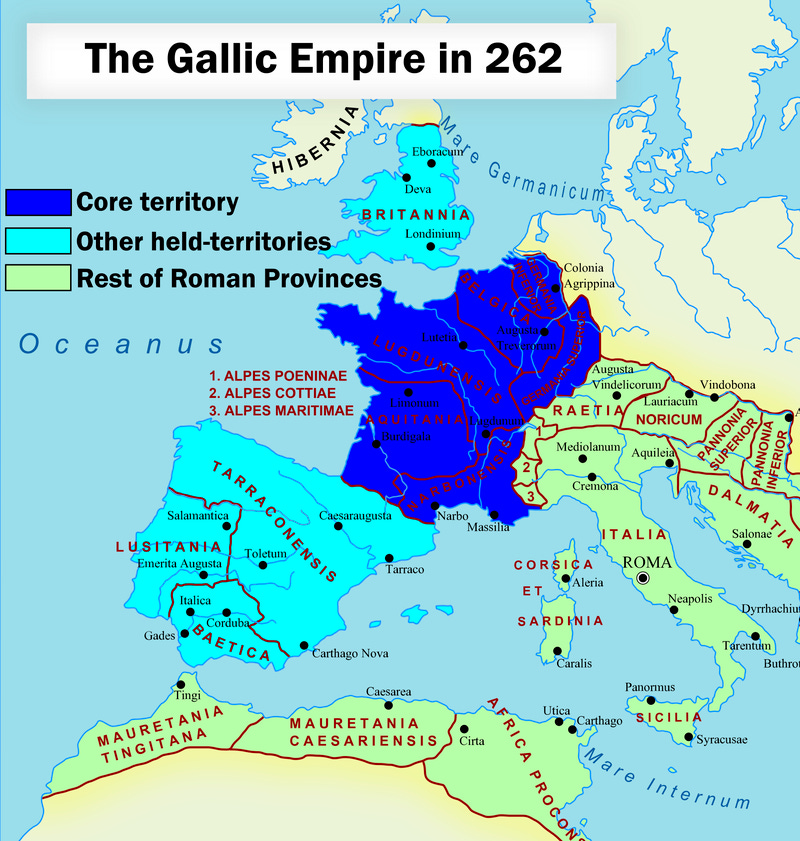
The Gallic Empire was established by Postumus in 260 in the wake of barbarian invasions and instability in Rome, and at its height included the territories of Germania, Gaul, Britannia, and (for a time) Hispania. After Postumus' assassination in 269 it lost much of its territory, but continued under a number of emperors and usurpers. It was retaken by Roman emperor Aurelian after the Battle of Châlons in 274.
History of the Gallic Empire is something for the history books, that is certain. Here is a map of the area and what territories it had at that time.
Virtuosity and virtus are interconnected concepts, each contributing to a distinct aspect of excellence. Virtuosity denotes the skill and prowess of a performer, particularly in fields like music, art, or sports. Rooted in the Latin word virtus, meaning "force, worth, power," virtuosity highlights exceptional skill, technique, and flair in task performance. A virtuoso, exemplified by a proficient pianist, captivates audiences with their remarkable feats, executing complex pieces with speed, accuracy, and expressiveness.
In contrast, virtus, also originating from the Latin virtus, takes on a different significance within ethical and philosophical contexts. Virtus embodies moral virtue and personal excellence, aligning with reason, justice, and the common good. In ancient Roman culture, virtus encompassed qualities like courage, honor, and civic duty, garnering respect and admiration for those possessing it.
Both virtuosity and virtus share a connection to Aristotle's notion of fulfilling one's true function or telos. Aristotle posited that every entity has a telos, with goodness derived from fulfilling it properly. For humans, the telos is to reason and act upon it. Thus, virtus, defined by moral virtues, arises from aligning actions with reason, the source of virtue. Aristotle also distinguished between intellectual and moral virtues, asserting that a virtuous person possesses a balanced and harmonious character.
In summary, virtuosity and virtus represent excellence in different realms—performative skill and personal character, respectively. Both concepts draw inspiration from Aristotle's idea of realizing one's purpose, emphasizing the importance of understanding these nuances to grasp the broader context of excellence.
More to come soon.